
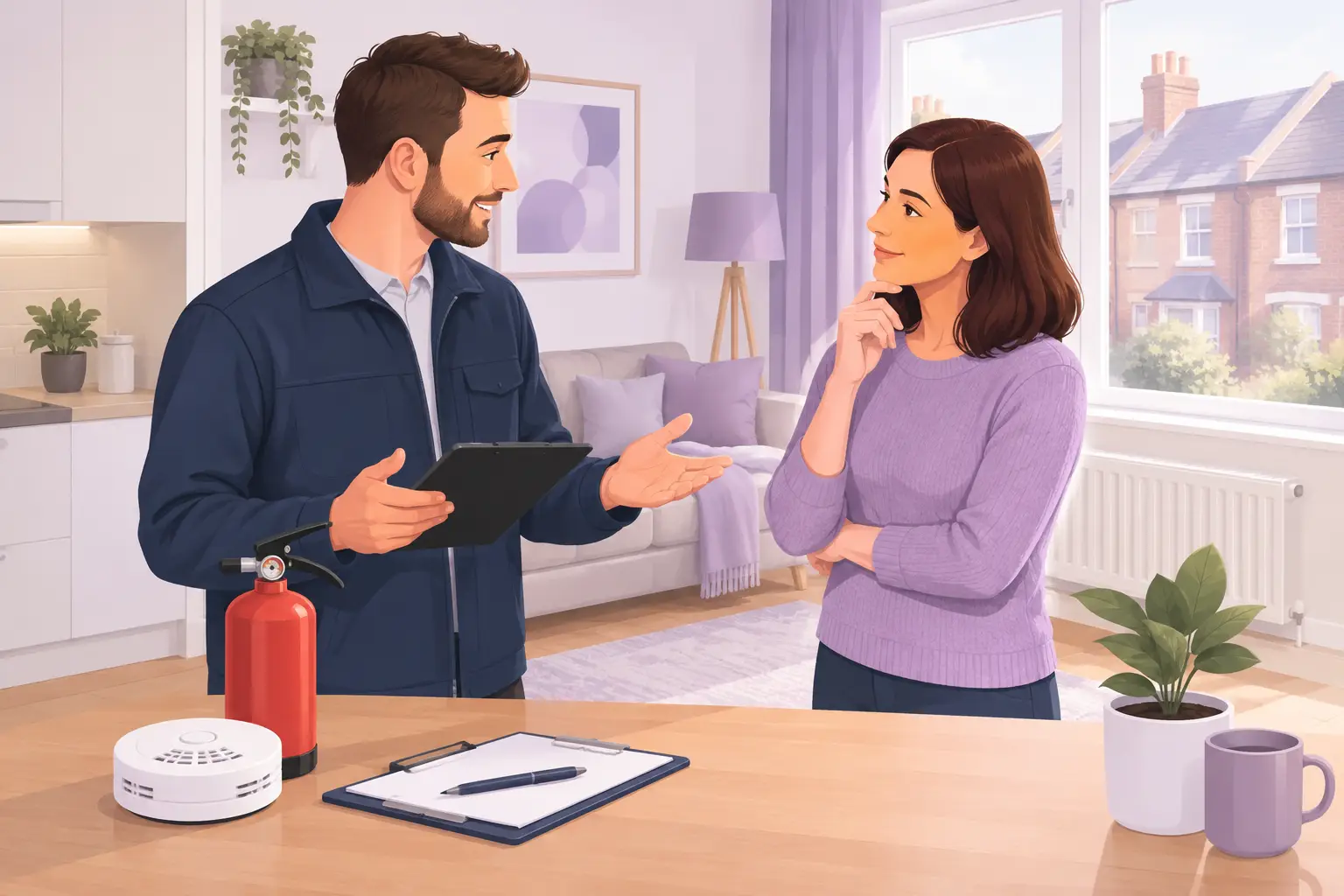
A loose handrail, an overdue gas check or an awkward visit to an empty property can feel like separate issues. They are not. Landlord safety is the everyday discipline of protecting tenants, contractors, visitors and yourself before a small concern becomes harm, disruption or a difficult dispute.
For landlords, safety is not about trying to control every risk or becoming an expert in every trade. It is about knowing what needs attention, keeping clear records, using properly qualified people where required and responding calmly when something changes. That approach usually leads to better homes and more workable tenancies too.
Landlord safety starts with a safe home
A rental property should be safe to live in from the first day of a tenancy, not just when a certificate is due. Begin with the basics: the structure, heating and hot water, electrics, fire precautions, security, ventilation and visible hazards such as damaged flooring, loose carpets, broken glazing or unsafe steps.
Some obligations are specific and legally enforceable, while others are sensible preventative maintenance. The detail can differ across England, Wales, Scotland and Northern Ireland, and requirements change over time. For example, rules around smoke and carbon monoxide alarms, electrical safety and tenancy standards are not identical in every nation of the UK. Check the current rules that apply to the property’s location and seek qualified legal or compliance advice where you are unsure.
Gas work is a clear example of where professional boundaries matter. Gas appliances and flues need appropriate inspection and maintenance by a suitably registered engineer. Electrical installations also require proper attention, with inspection, testing and remedial work handled by competent professionals. A landlord does not need to diagnose a fault, but they do need to take reports seriously and act on professional findings.
Fire safety deserves the same practical mindset. Working alarms, sensible escape routes and suitable fire precautions can save lives, but a rushed purchase of equipment is not a complete plan. Consider the layout, the type of tenancy and any shared areas. A converted house with several occupiers may involve more complex duties than a straightforward single-household let. If the property may be an HMO or has communal parts, obtain specialist guidance rather than assuming the usual buy-to-let checklist covers it.
Treat maintenance reports as useful information
Tenants often spot problems first because they live with them. A report of mould, a flickering light, a leaking pipe or a stiff door may have several possible causes. It is unhelpful to jump straight to blame, whether that means assuming tenant behaviour or assuming a major building defect.
A better first response is to acknowledge the issue, ask for clear details and photographs where appropriate, and agree the next step. Keep communication polite and in writing. This creates a useful record and helps everyone understand what has been reported, when access is needed and what work has been arranged.
Damp and mould are a good example of why context matters. Condensation, inadequate heating, poor ventilation, water ingress and building defects can overlap. The answer may involve repairs, ventilation improvements, clearer use of extractor fans or a combination of actions. A qualified contractor can help identify the cause. The aim is not to win an argument about responsibility. It is to make the home safer and prevent recurring damage.
Set a realistic process for urgent issues. Tenants should know how to report an emergency, what counts as one and what to do if there is immediate danger, such as a suspected gas leak, serious electrical fault, fire or major escape of water. Give simple instructions at the start of the tenancy and repeat them when needed. If an emergency service or utility provider needs to be contacted, that should not wait for ordinary office hours.
Safer property visits protect everyone
Inspections, repairs and check-ins are part of responsible management, but access needs care. Give the notice required by the tenancy agreement and applicable law, agree a time where possible, and explain the purpose of the visit. Turning up unexpectedly can undermine trust, even where a landlord has genuine concerns.
For your own safety, avoid visiting an unfamiliar property alone if you feel uncomfortable about the situation. This is particularly relevant for first meetings, vacant properties, late appointments, disputes or visits involving substantial works. Tell someone where you are going, share your expected finish time and keep your phone charged. If a situation has become tense, consider using a letting agent, contractor, colleague or other appropriate person rather than trying to manage it alone.
Contractors also need clear information. Tell them about known hazards, access arrangements, parking restrictions, pets and any relevant occupant needs. In return, use tradespeople with the qualifications, insurance and experience appropriate to the work. The cheapest quote is not always the safest or most reliable choice, particularly where gas, electrics, structural work, fire safety or specialist repairs are involved.
Vacant properties need their own routine. Check for signs of water leaks, forced entry, damaged windows, dumped items and heating issues in colder periods. Make sure keys are controlled, not passed casually between multiple people, and update locks when circumstances justify it. Empty homes can deteriorate quickly, and small defects are easier to address before a new tenancy begins.
Personal safety and professional boundaries
Most landlord-tenant communication is ordinary and respectful. Still, a clear boundary plan is sensible. Keep messages factual, avoid heated exchanges and do not respond impulsively to abusive or threatening communication. Save relevant evidence, including messages, photographs and dates, rather than relying on memory later.
If you are concerned about harassment, violence, illegal activity or immediate danger, prioritise personal safety. Do not attempt to remove someone, enter a property or resolve a serious confrontation yourself. Contact the police or relevant emergency services where appropriate, and take qualified legal advice before acting on tenancy enforcement matters. There are strict rules around possession, eviction and access. Frustration with arrears or property damage does not remove those duties.
This is also where being people-first is practical, not just polite. Tenants may be dealing with illness, bereavement, financial pressure, disability or a safeguarding concern. You do not need to become their counsellor or make decisions outside your role. You can communicate clearly, signpost suitable support where appropriate and allow professional services to handle matters that need specialist intervention.
Keep records that support good decisions
Safety work is easier to manage when the information is organised. Keep current copies of certificates, inspection reports, invoices, photographs, contractor details, maintenance requests and records of completed work. Store key dates in a diary or system that you will genuinely use.
A simple property file can help you spot patterns. Repeated leaks in the same area, recurring mould in a particular room or frequent call-outs to an appliance all point to questions worth investigating. Replacing a failing item or addressing an underlying defect can be more sensible than repeatedly paying for short-term patches.
Before a tenancy starts, a detailed inventory with dated photographs helps establish the property’s condition. During the tenancy, periodic inspections can identify maintenance needs early, provided they are conducted with proper notice and respect for the tenant’s home. After works are completed, check that the problem has actually been resolved. A closed invoice is not always the same as a safe outcome.
Build a proportionate landlord safety routine
A safety routine should fit the property and the way you manage it. A single flat with one long-term tenant will not need the same approach as a multi-let house or a refurbishment project. What matters is consistency.
Review upcoming compliance dates well before they expire. Deal with reported hazards promptly. Inspect between tenancies rather than assuming the last condition is unchanged. Budget for planned maintenance, not only emergency repairs. And reassess when the property changes, such as after alterations, a change in occupancy or the installation of new equipment.
If you are new to letting, it is reasonable to feel that there is a lot to hold in your head. Start with a clear compliance and maintenance checklist for your property type, then ask qualified professionals focused questions. Property education can help you understand the landscape, but it should never replace an electrician, gas engineer, surveyor, solicitor or other regulated professional when their expertise is needed.
A safer rental is rarely created by one dramatic decision. It is built through ordinary actions taken seriously: listening when a problem is reported, planning visits properly, keeping records and knowing when to ask for help. That gives tenants greater security and gives you a calmer, more responsible way to manage the home.
- Check the current rules that apply to the property’s location and seek qualified legal or compliance advice where you are unsure.
- A landlord does not need to diagnose a fault, but they do need to take reports seriously and act on professional findings.
- Most landlord-tenant communication is ordinary and respectful.
- Contact the police or relevant emergency services where appropriate, and take qualified legal advice before acting on tenancy enforcement matters.
Summarised from this article in its own words. Education only — not financial, tax, mortgage or legal advice.